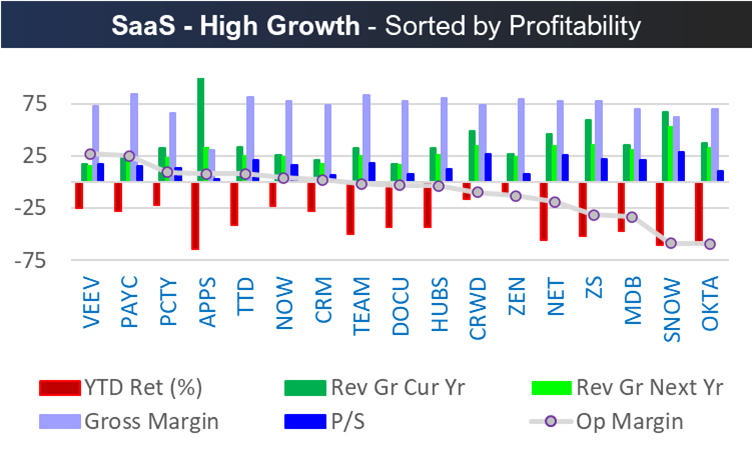
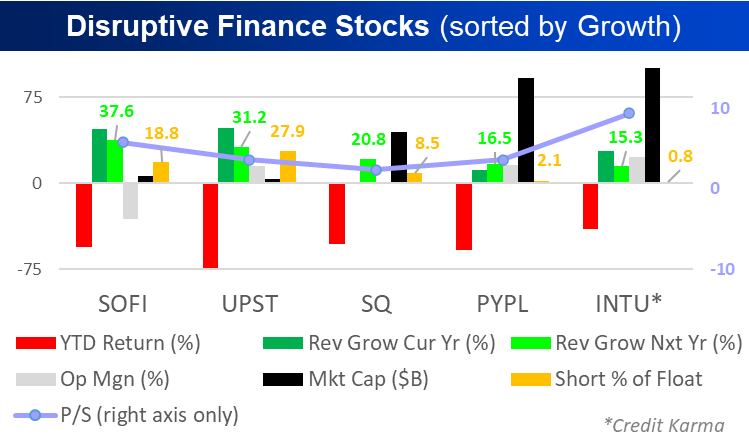
The minutes from the Fed’s June meeting were released today, and they show a continued laser-focus on inflation (i.e. the fed is scared). Yet interestingly, Energy stocks and 10-year treasury rates keep declining in what may be a case of the market being a few steps ahead of the minutes from a meeting that took place in the past. For example, here is a look at the one month performance of energy stocks, and it has been ugly!
Signs of Slowing Inflation
S&P futures are hovering around flat to slightly negative so far this morning, as we head into a day where the upcoming release of last week’s fed meeting minutes may already be outdated. Both treasuries and commodity prices have been trending lower, a sign that the fed’s inflation fight may be less dire than last week’s minutes convey. Markets tend to recover long before recessions end. This report shares data on past recessions, chip stock valuations (e.g. Nvidia, AMD, Micron and Intel) and an update on the market’s technical position.
Positve Signals: Growth Stocks Up, Commodities Down
BH THINKER: The Worst First Half for Stocks in 50 Years
10-Day Market Reversal
Lead of Value Over Growth
10-Year Treasury vs Growth Stocks
As you can see in the following chart, there has been a high correlation between high-growth stocks (as measured by the Ark Innovation ETF (ARKK)) and the 10-year treasury rate. More so than for the S&P 500 or the Dow.
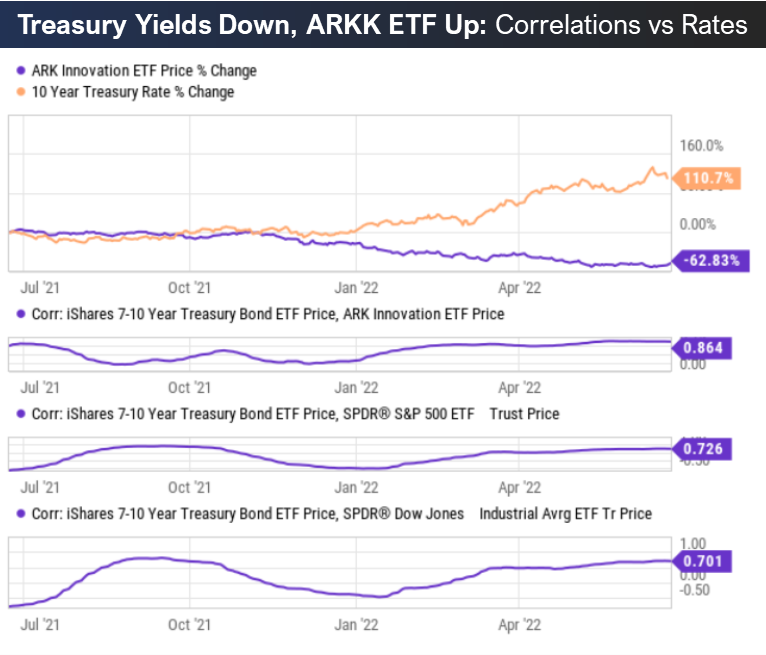
The reason is because as the fed raises rates to fight inflation, they slow down the economy as a side affect, and the most growth-oriented names are the most negatively affected.
Considering we just had the largest drop in 10-year treasury rates this week since Covid, it was off-to-the-races for ARKK and high-growth stocks in general.
Top Sales Growth: 20 Worst Performers
The Big-Dividend Report
Chip Stocks: Price-to-Sales Ratios Decline
Looming Recession?
China "Tech Crackdown" Reversing
40 Big-Dividend BDC's: Price-to-Book Values
High Growth Stocks - with Room to Run
These are potentially “rocket fuel” stocks in the coming months, IF inflation has peaked and the Fed becomes less hawkish. It also doesn’t hurt that China has decided to lighten up on its crack down on tech. The “% of 52-Week Price Range” shows how much more upside these stocks could have relatively to where they sit between their 52-week highs and lows.
The Tech Bubble Took Over 2.5 Years to Fully Burst
The Tech Bubble (QQQ) peaked on 3/10/2000 and it took more than 2.5 years for it to fully burst. We are in a different environment today (i.e. low rates rising, massive revenue also rising for top growth stocks), but here is sector performance when the bubble burst (the first year and peak to bottom). Cathie Wood’s ARKK ETF peaked in June 2021 and the Nasdaq (QQQ) peaked in late 2021.