

Nvidia is a once-in-a-generation stock (it’s up +24,000% in the last 10 years and +207,000% since going public). And if you’re like a lot of people, you’re sitting on massive gains and a relatively large position. If you own the shares in an IRA then capital gains tax is not an issue, but position size may be. In this quick note, we share some thoughts on how much Nvidia you should hold, how much you should sell, and why (i.e. growth opportunities, taxes and risks).
About Nvidia (Hint: It’s still attractive!)
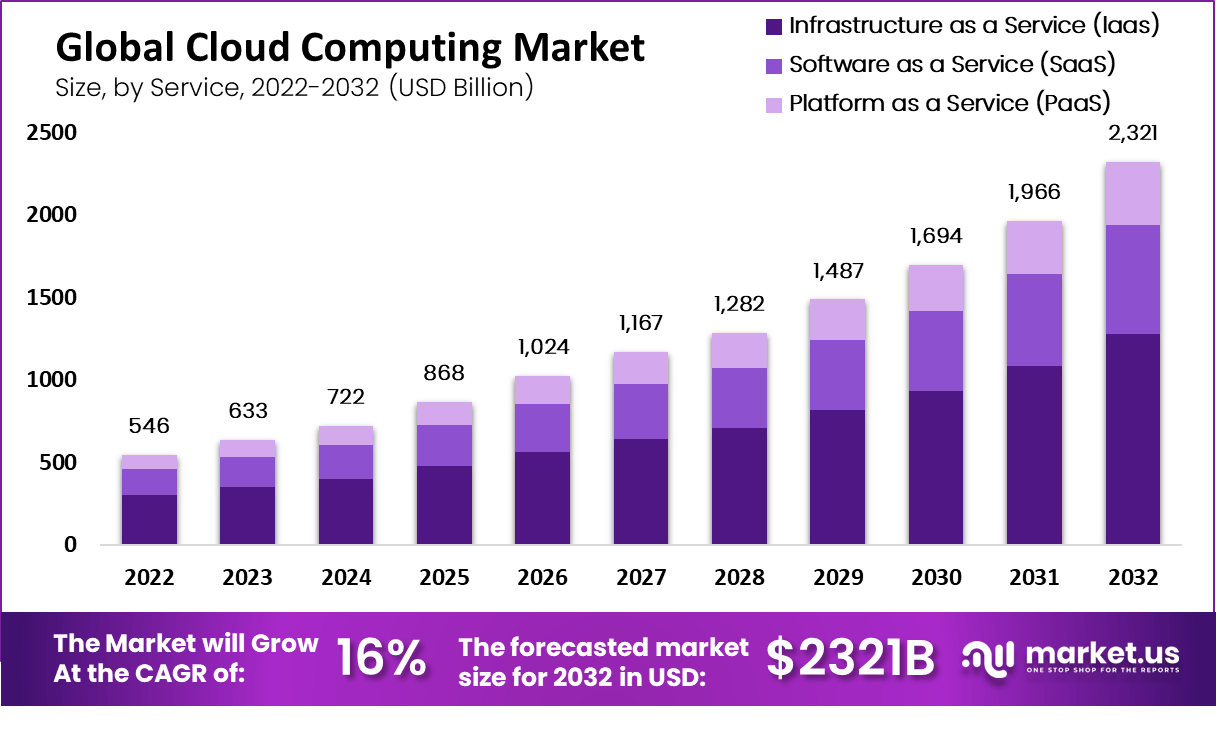
In case you’ve been living under a rock, Nvidia is the leading chip stock in the massive ongoing digitial revolution, transition to the cloud and now artificial intelligence (“AI”) megatrend. And despite massive gains for the stock, its still inexpensive (it trades at a very attractive 1.0x forward PEG ratio) and the AI/digital revoluion is still just barely getting started (see chart below).
Note: Forward PEG is Price/Earnings to Growth Forward Ratio, or PEG Forward, attempts to improve upon Price/Earnings comparisons by accounting for earnings growth. It is calculated by dividing the forward Price/Earnings Ratio for the next 12 months by the estimated Earnings Per Share (EPS) growth for the next 5 years. The lower the PEG value, the cheaper the valuation; values of 1 suggests perfect pricing. If the expected growth or forward Price/Earnings value is negative, then no PEG ratio is calculated.
Risk Management:
In our view, Nvidia shares are still going dramatically higher over the next decade (based on its leading position in the cloud/AI megatrend). However, the chip sector (including Nvidia) is notoiously volatile (50-60% share price pullbacks are not uncommon) and if you’re sitting on more than a 6.5% position size (i.e. if Nvidia is more than 6.5% of your total portfolio), you may want to consider reducing your postion size.
For example, Nvidia is 6.5% of the S&P 500 (it’s now second largest after Microsoft at 7%), so if you are holding more than that amount, you are betting on Nvidia to outperform (and if you hold less then you’re betting on it to underperform the S&P 500). And if your high-level portfolio allocation is 50% stocks and 50% bonds, then cut those numbers in half (i.e. you’re overweight Nvidia if you hold more than 3.25% in a 50/50 balanced portfolio).
Obviously, time horizon and volatility tolerance makes a huge difference here (for example, some people are more or less likely to panic if the shares fall 50%). From a risk management standpoint, you need to know yourself (psychological disposition and behavior) and your long-term view (are you comfortable being over/under-weight Nvidia versus the S&P 500).
Nvidia is clearly a critical component of the US and global economy and it’s hard to imagine that chaging dramatically anytime soon (although stranger things have happened).
Tax Consequences:
If you own Nvidia in a Roth IRA—congratulations! You’ll never pay taxes on the gains. And if you own it in a traditional IRA—congratulations—you’re much better off than people owning it in a taxable account.
However, if you own Nvidia in a taxable account then you are staring in the face of some enormous capital gains taxes if/when you sell (and there is increasing pressure to sell if your position size has ballooned recently—like it has for so many).
Note: The impetus for this note is a Blue Harbinger reader sitting on a few thousand shares with a cost basis of $85/share. The shares currently trade at $1,233—pre-split—so he has roughly $3.4 million in capital gains. And capital gains are generally taxed at 15% if/when you sell (depending on your tax bracket).
Tax Strategies
Take the Tax Hit: First of all, if you’re sitting on huge gains in Nvidia in your taxable account—it’s a “high-class” problem. Even after paying any potential capital gains taxes, you’re still benefiting from huge profits. Nice work!
Capital Loss Harvesting: To reduce the tax impact, check your account for any stocks you own that are currently trading at large unrealized capital losses. You can offset capital gains (from Nvidia) with capital losses on other postiions. And even though you likely won’t have enough unealized losses to offset all of the gains—you can still reduce your tax bill (and this activity is potentially a great way to rebalance your total portfolio towards your goals). Also, capital loss harvesting in one of the advantages of owning individual stocks over a passive market ETF (because the ETF doesn’t have as many holdings or opportunities to offset tax gains with losses—i.e. the ETF is just one position).
Donor Advised Funds: You can also eliminate some of the capital gains tax by donating some of your Nvidia shares to a donor advised fund. And once the shares are in the donor advised fund you can diversify right away but delay making the donations (to the charity of your choice) for many years. So if you are a chartable person, Nvidia can be the source of your donations for many years into the future.
Irrevocable Trust: Check with your lawyer, but there is a $13+ million lifetime gift tax exemption for your estate, and by putting some of your Nvidia shares in an irrevocable trust now, you may be able to diversify/rebalance right away without taking the capital gains hit and then leave the proceeds to your heirs after you are gone. Again, not tax/legal advice—check with a qualified attorney.
Never Sell! It’s ridiculous to suggest selling Nvidia just because the performance has been so great. That’s like benching Michael Jordan just because he was already the NBA scoring leader. Nvidia is the leading chip maker and the AI digital revolution and migration to the cloud is still just barely getting started. These share have a $3 trillion market cap and they can go to $10 trillion in the next decade.
The Bottom Line
If you are sitting on huge Nvidia gains—congrats! Just realize, if you have more than 6.5% of your account in Nvidia then you are betting on it to outperform the S&P 500 (because that’s roughly the weight in the index), and if you have less than 6.5% you are betting on it to underperform the market index.
And if you own it in a tax-advantaged IRA—contrats! You don’t have to deal with all the capital gains tax issues. But if you do own Nvidia in a taxable account you have options to help minimize the amount of capitail gains tax your owe if you sell some shares for risk management purposes.
However, if you can stomach some huge volatility (i.e. 50-60% price declines have occured for Nvidia four times since 2000) then you might consider hanging on to a reasonably significant amount of shares (because Nvidia STILL has the potential to go MUCH higher in the decade ahead).
Long Nvidia.