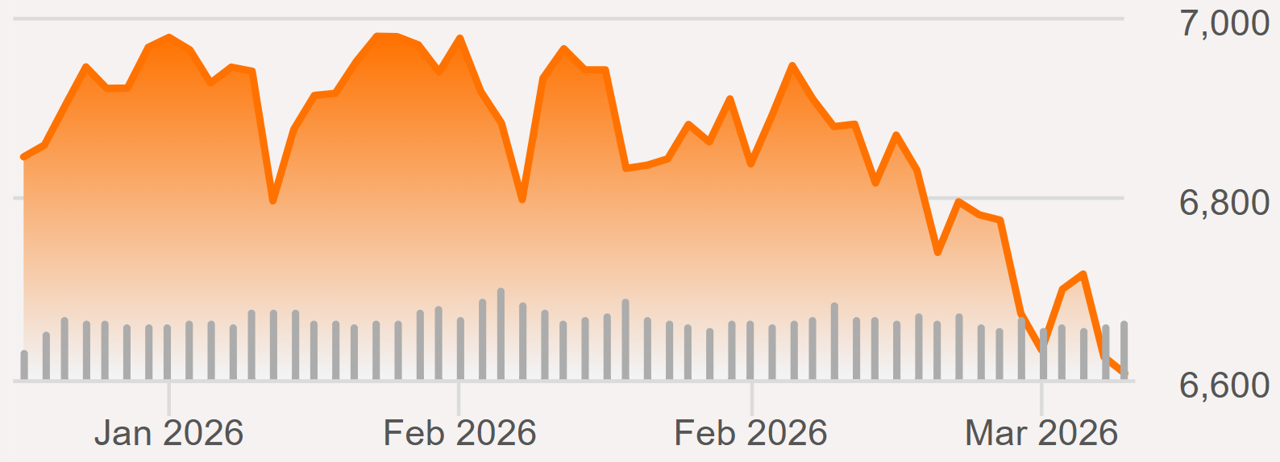
As we move through mid-March, markets are sending a surprisingly calm signal. Despite escalating geopolitical tensions, rising oil prices, and sharp sector rotations, the S&P 500 has remained remarkably stable. Down only ~3% this year, the index reflects quiet resilience in the face of loud headlines. But let’s take a look under the hood…
Oil Shock and Energy Leadership
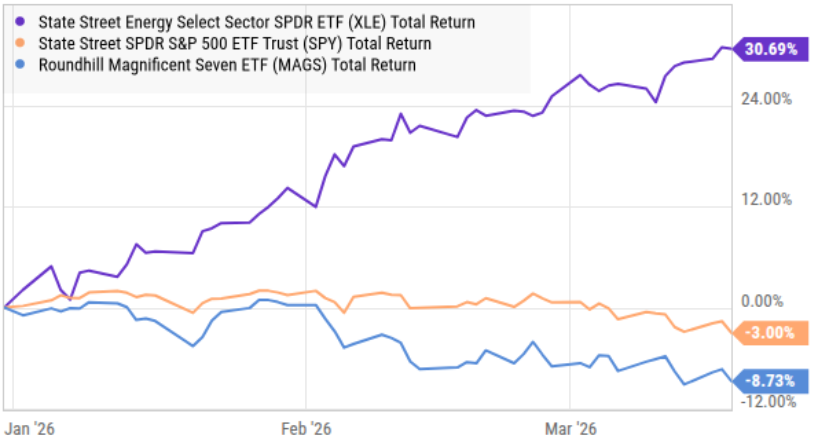
As you may have noticed, geopolitical headlines have pushed crude and energy stocks (XLE) sharply higher as investors rotate toward real assets and inflation beneficiaries.
Rotation Away from Mega-Cap Tech
At the same time (as you can also see in the chart above) The Magnificent 7 mega-cap stocks (MAGS) have pulled back meaningfully, as higher input costs (i.e. energy) and macro uncertainty weigh on sentiment. However, this is not a collapse in fundamentals—but a repricing after an extended period of dominance.
The AI Megatrend Remains Intact
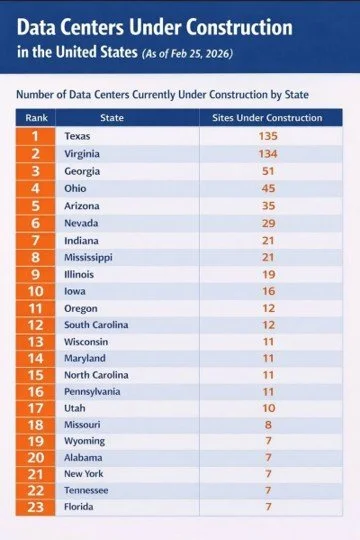
Importantly, the structural story around artificial intelligence (see chart above) continues to strengthen. Demand for compute, data infrastructure, and advanced semiconductors remains robust. Blue Harbinger holdings like Vertiv (VRT) and Micron Technology (MU) have surged on this theme, reflecting real capacity constraints and accelerating capital investment cycles.
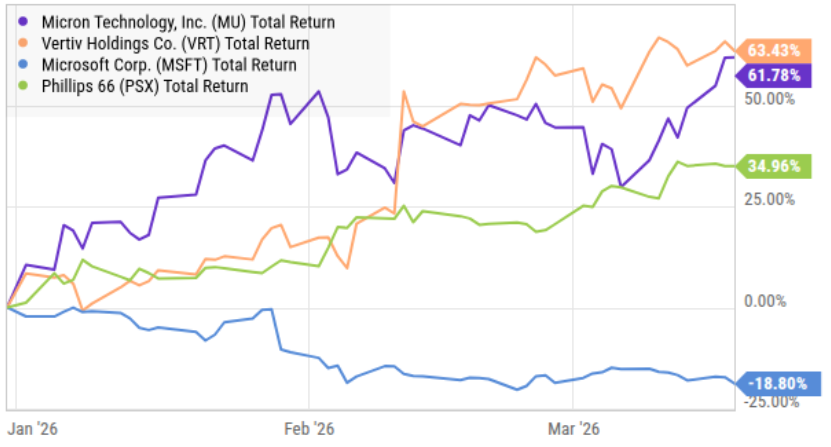
At the same time, this rotation has created more attractive entry points in core platform companies. Microsoft (MSFT), for example, has retraced despite its central role in AI via Azure and Copilot—highlighting the distinction between long-term fundamentals and short-term positioning.
Rebalancing Opportunity
This kind of dispersion is exactly when disciplined rebalancing adds value.
Trim outsized winners where positioning has become stretched.
Reduce concentration risk in names that have moved rapidly.
Reallocate toward high-quality franchises trading at more reasonable levels.
Selective profit-taking in recent outperformers, paired with incremental additions to durable compounders, helps restore balance without abandoning core themes. The goal isn’t to call tops or bottoms—but to stay aligned with long-term drivers while managing risk.
The Timeless Lesson
Markets are often far more resilient than the headlines suggest. Conflict, commodity shocks, and rotations are absorbed more smoothly than expected—something current price action reinforces (i.e. despite the volatility, the S&P 500 has barely budged this year).
Rebalancing around the edges can add value (I own big winners VRT, MU and PSX in the Blue Harbinger Disciplined Growth Portfolio), but staying invested (and avoiding reactive decisions) still remains one of the best paths to long-term success. Long-term value is rarely built through dramatic shifts, but through steady discipline applied over time.